
Methods for Agile HArdware Development
MAHD:
Rapid Project Ramp-up and Focused Iterations
Auxilium’s Methods for Agile Hardware Development (MAHD) approach is a market success framework that facilitates clear strategic priorities and cross-functional collaboration to enable rapid execution with transparency. Projects ramp up quickly with the right focus using the MAHD On-ramp steps as applicable, ideally integrated with your current methods to provide the greatest benefit while minimizing disruptive change. The result of the On-ramp is a clear and committed first iteration with a rough iteration plan for project completion.
Contact us to learn more and discuss training and support options.


Team Alignment on a Cadence
The main benefit of the MAHD iterative approach for product development is consistent team alignment that enables focus on the right priorities. With a flexible cadence in the recommended range of 2-to-8 weeks, teams can adapt to changing conditions while constantly making progress that delivers the greatest value currently needed.
MAHD Benefits
MAHD On-Ramp
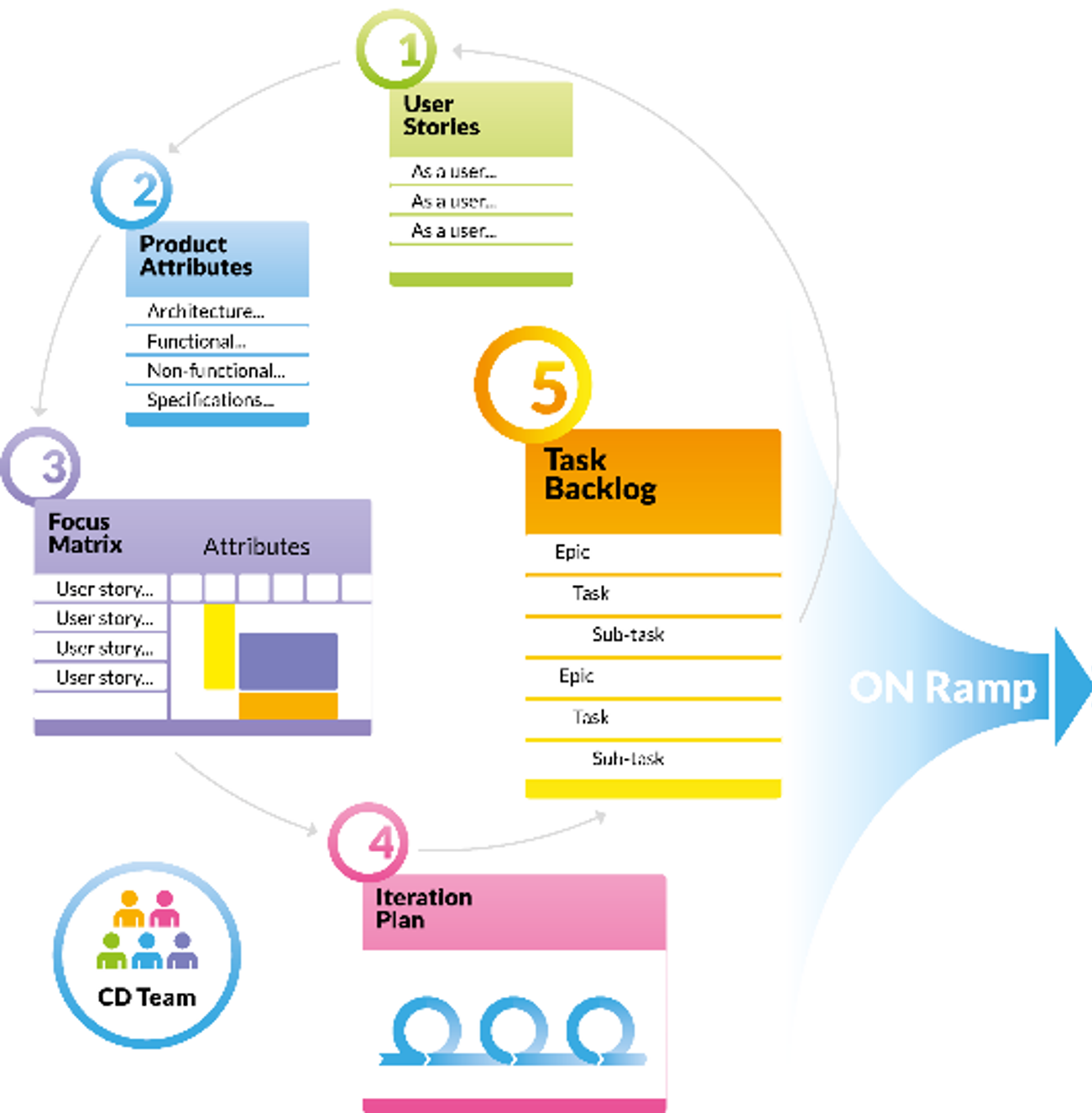
The MAHD On-Ramp is a series of five planning steps driven by the product vision, designed to facilitate a collaborative fast start with the right focus. Initial customer needs aligned with the vision are communicated via a prioritized user story approach as the basis for detailed planning and execution. The optional Focus Matrix is helpful for complex projects to prioritize the product/project attributes of concern regarding risks and innovation needs.
With clarity about where to initially focus efforts, the initial IPAC Iteration Plan is the output of the On-ramp, with an initial backlog of identified work captured. To ensure adequate transparency and stakeholder engagement for ongoing iteration planning, the IPAC Iteration Plan must be captured and maintained in a user-friendly format such as an online whiteboard for high-level planning integrated with a project management tool for team details.
IPAC Iterations and Sprints
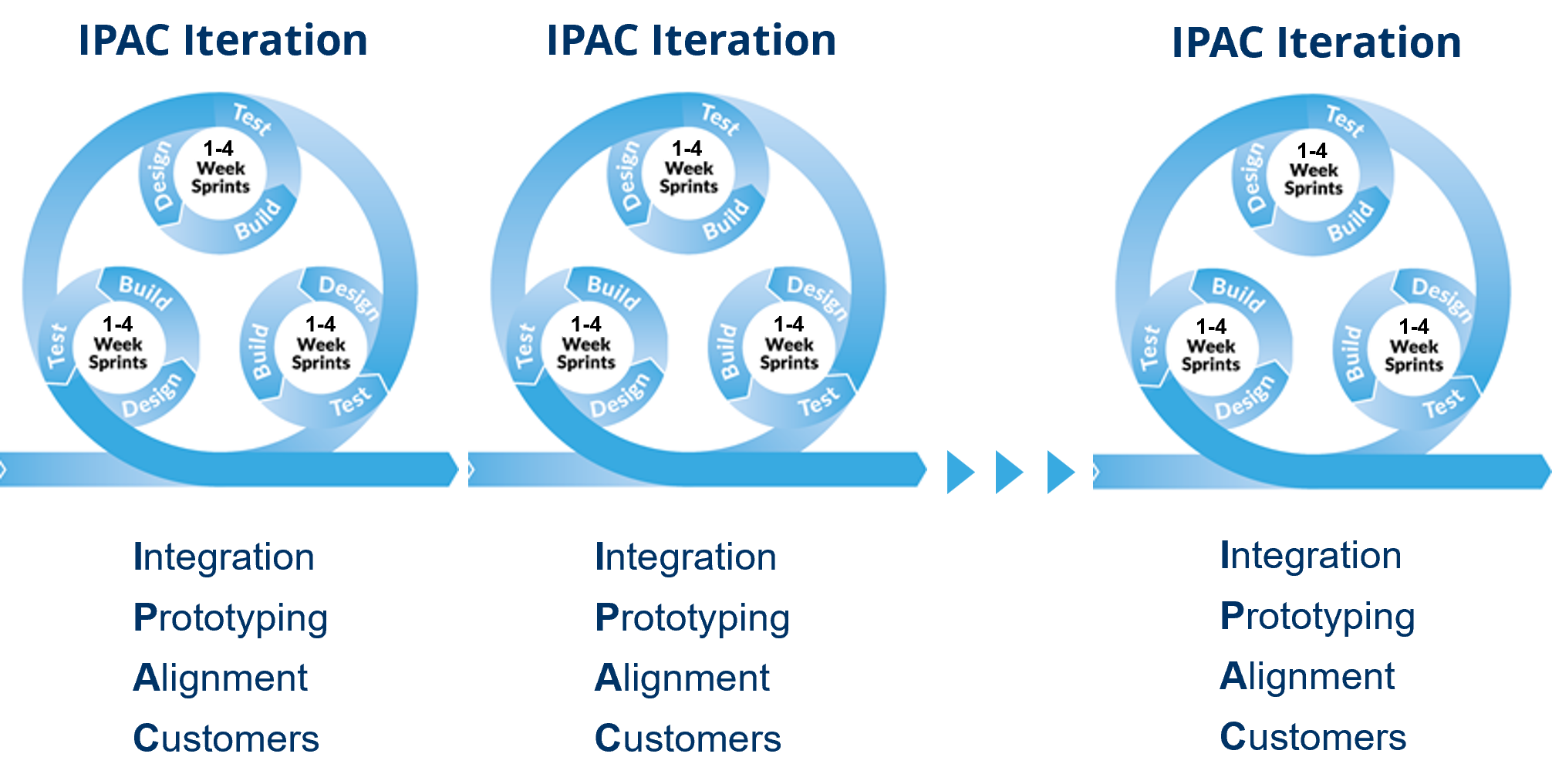
IPAC is an acronym for four major activities to consider when planning each cross-functional iteration: Integration, Prototyping, Alignment, and Customer Engagement. As a minimum, every iteration involves team and stakeholder alignment about priorities. The needs to integrate functionality, deliver some form of prototype(s) and involve customers are also considered along with general project management concerns.
At the start of each IPAC Iteration (typically 2-to-8 week flexible cycles), results from the previous cycle are demonstrated and stakeholders provide feedback. Planning sessions then determine team and individual commitment for the new iteration. Sprints are for detailed work breakdown to enable progress management toward IPAC Iteration commitments.
Example Use Case
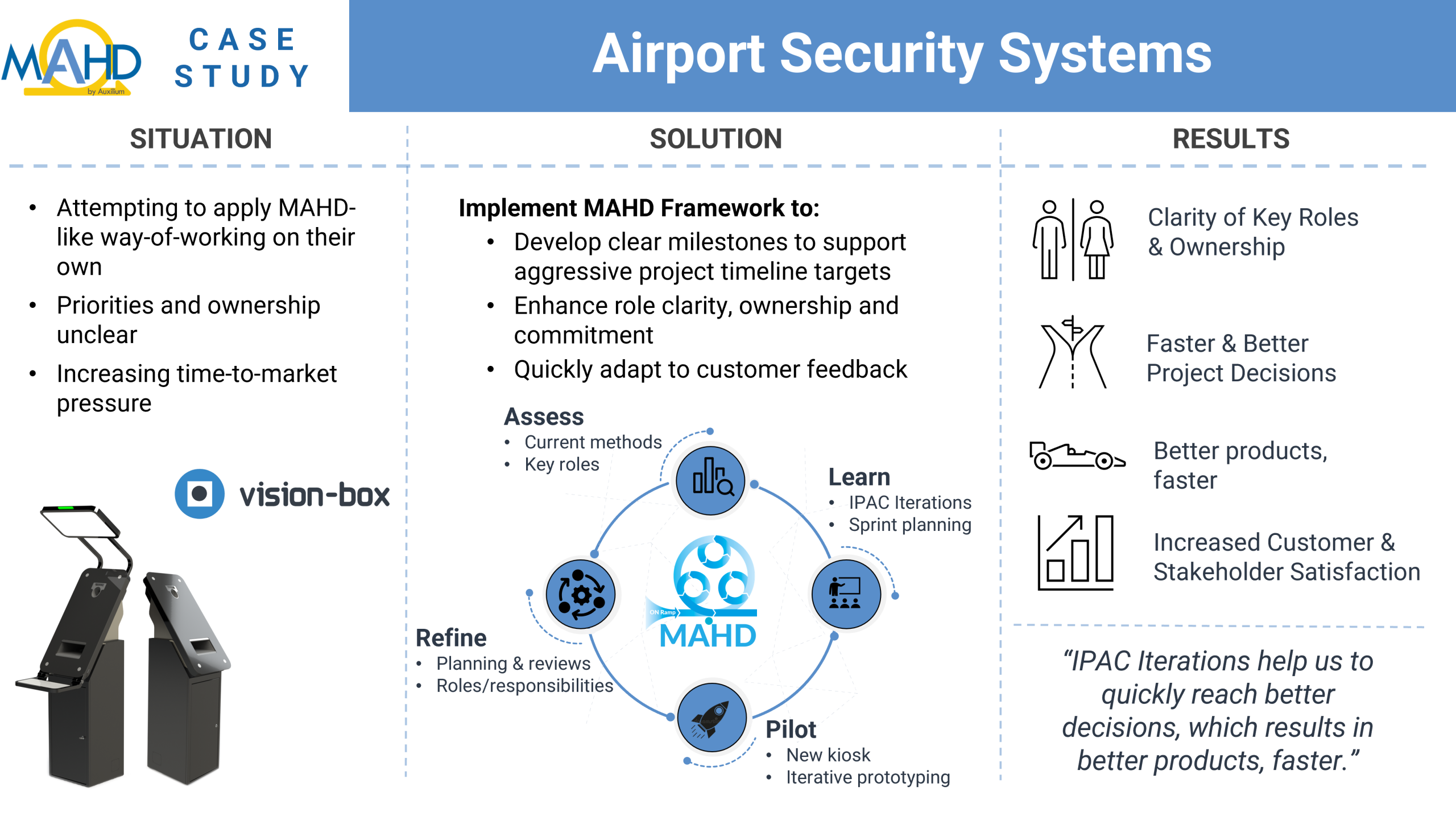
An airport security system provider had increasing pressure to deliver new products faster, with challenges regarding priorities and ownership. We facilitated hands-on workshops to implement MAHD elements for overcoming their main challenges quickly. Rapid results inspired management to adopt a MAHD approach company-wide and implement new key roles.
Contact us for other case studies and to discuss your situation, goals and challenges.