Integrated Delivery Architecture
IDA:
Integration of Product Strategy and Team Execution
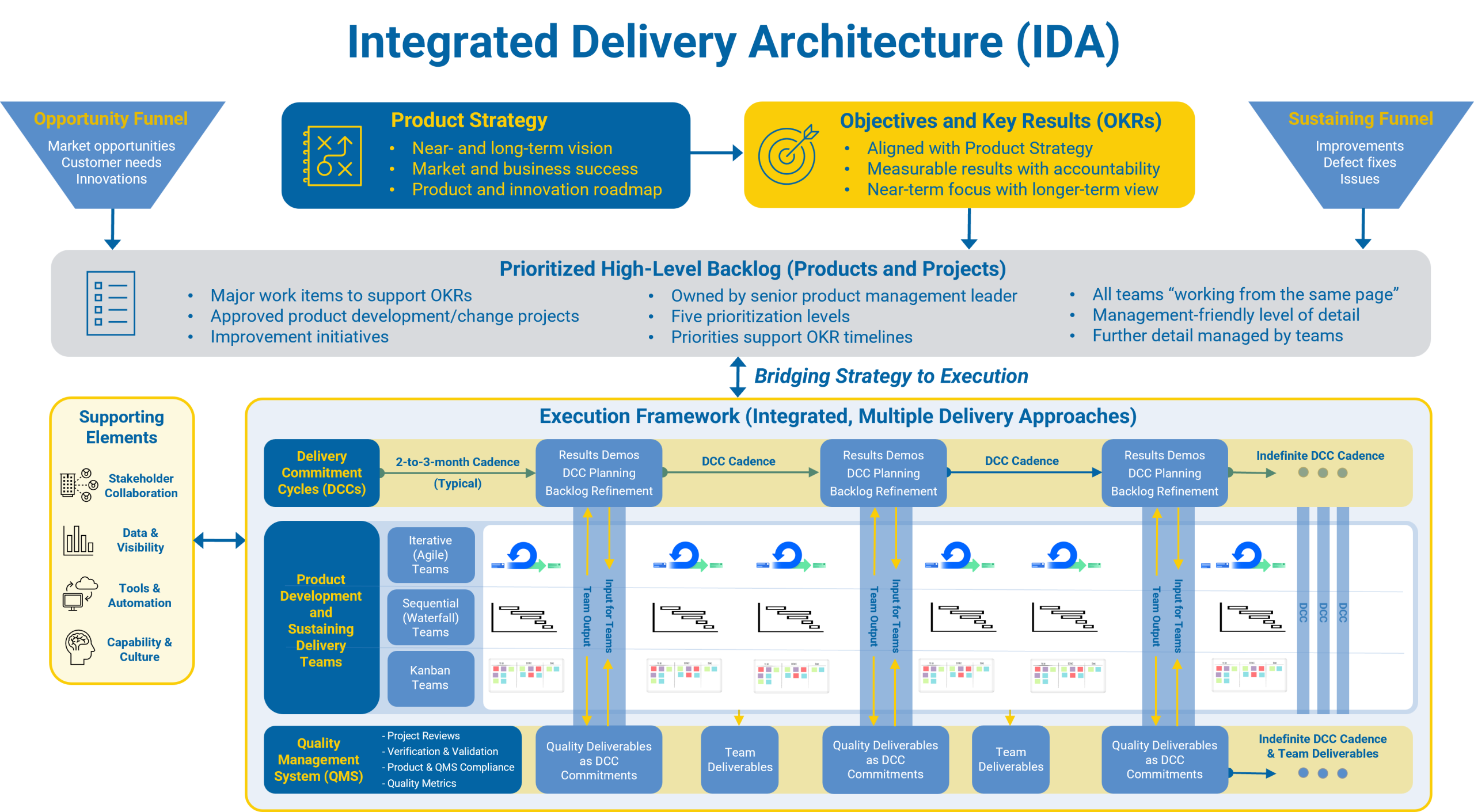
Auxilium’s Integrated Delivery Architecture (IDA) addresses common product development gaps by consistently integrating high-level strategic planning with localized team execution. IDA overlays an enterprise management layer across an organization’s existing workflows, allowing disparate teams to utilize the methodologies that suit them best. By synchronizing everyone onto shared priority hierarchies and milestone cadences, IDA can dramatically reduce operational friction, resource conflicts, and delivery delays.
Strategic Alignment through Objectives and Key Results (OKRs)
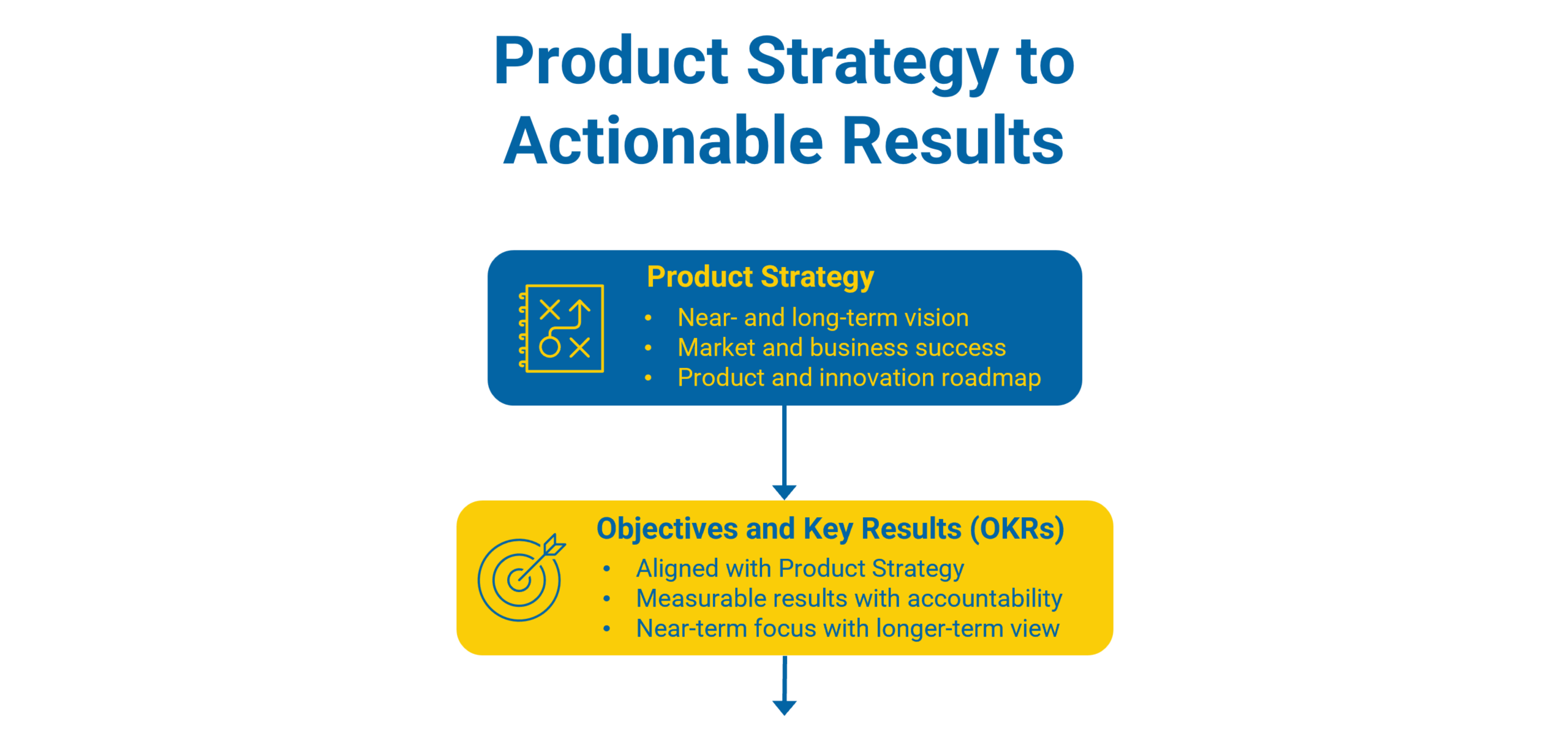
The foundation of IDA involves clear communication of business intent (product strategy), defined by the senior leadership team and owned by product management leadership. To achieve rapid progress aligned with strategy, OKRs place their primary emphasis on near-term results within a maximum three-month timeframe. Secondary emphasis is reserved for long-term vision and 1+ year planning, which often serves as the ideal starting point for defining future product cycles.
Every objective is assigned to an individual owner who is fully accountable for its results. Senior leadership’s adherence to this accountability serves as the model for team-level execution. Tying high-level objectives directly to measurable key results simplifies resource analysis and empowers individual teams to execute supporting projects using their localized methodologies and processes.
Integrated Delivery Architecture Benefits
High-Level Priority Backlog
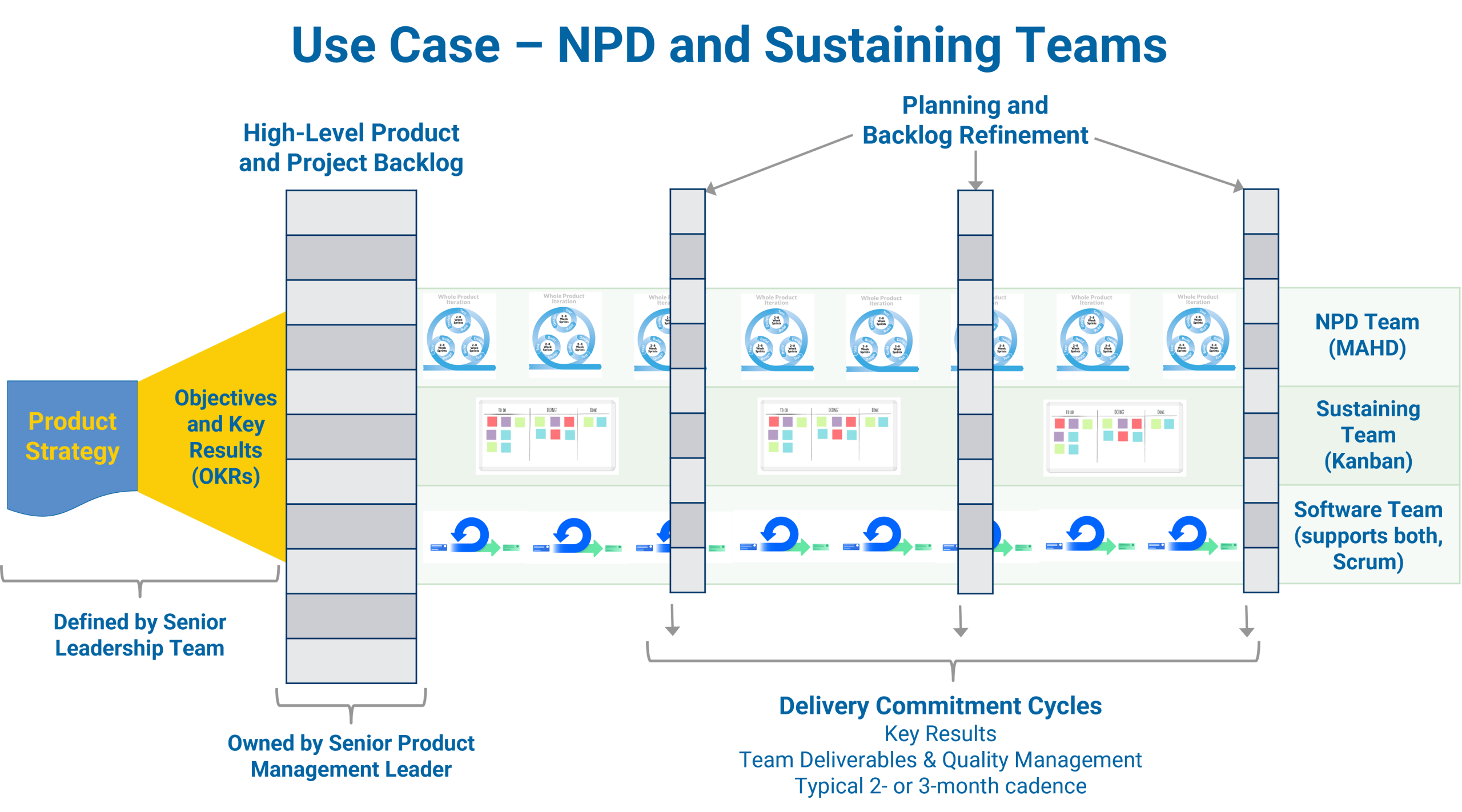
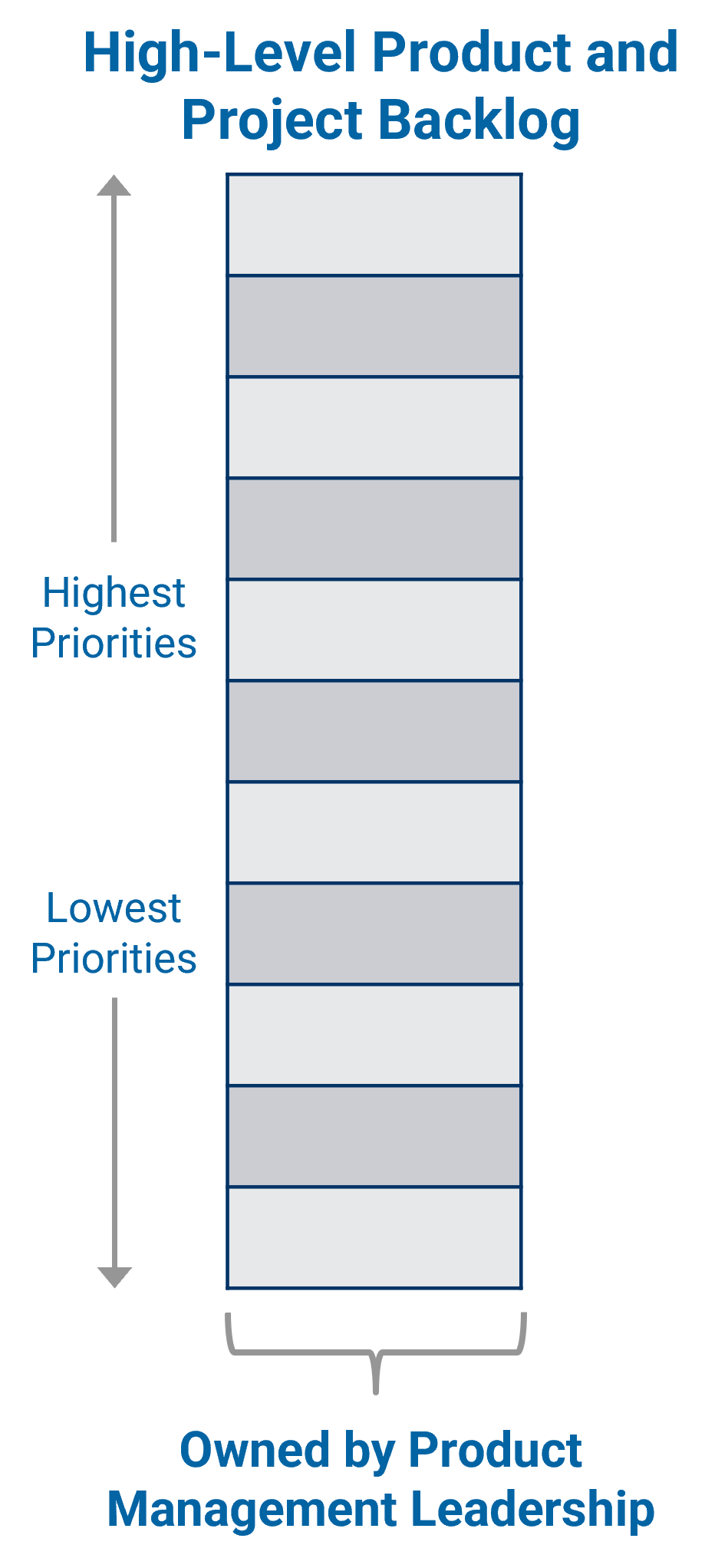
The high-level backlog drives all product teams to align with strategic priorities, objectives and key results (OKRs). It’s the primary communication to ensure that teams are literally “working from the same page.” A one-through-five prioritization scheme clarifies which approved projects need acceleration vs. those that can take longer.
Delivery Commitment Cycles (DCCs)
At the start of each two-to-three month cycle, results from the previous cycle are demonstrated and stakeholders provide feedback. Planning sessions then determine team and individual commitment for the new cycle. Typical deliverables are key results defined by OKRs; product milestones, capabilities and features; product releases; new innovations; progress toward breakthroughs; and cost reductions. Quality management concerns are addressed, as applicable, each cycle as part of IDA’s built in Quality Management System (QMS).

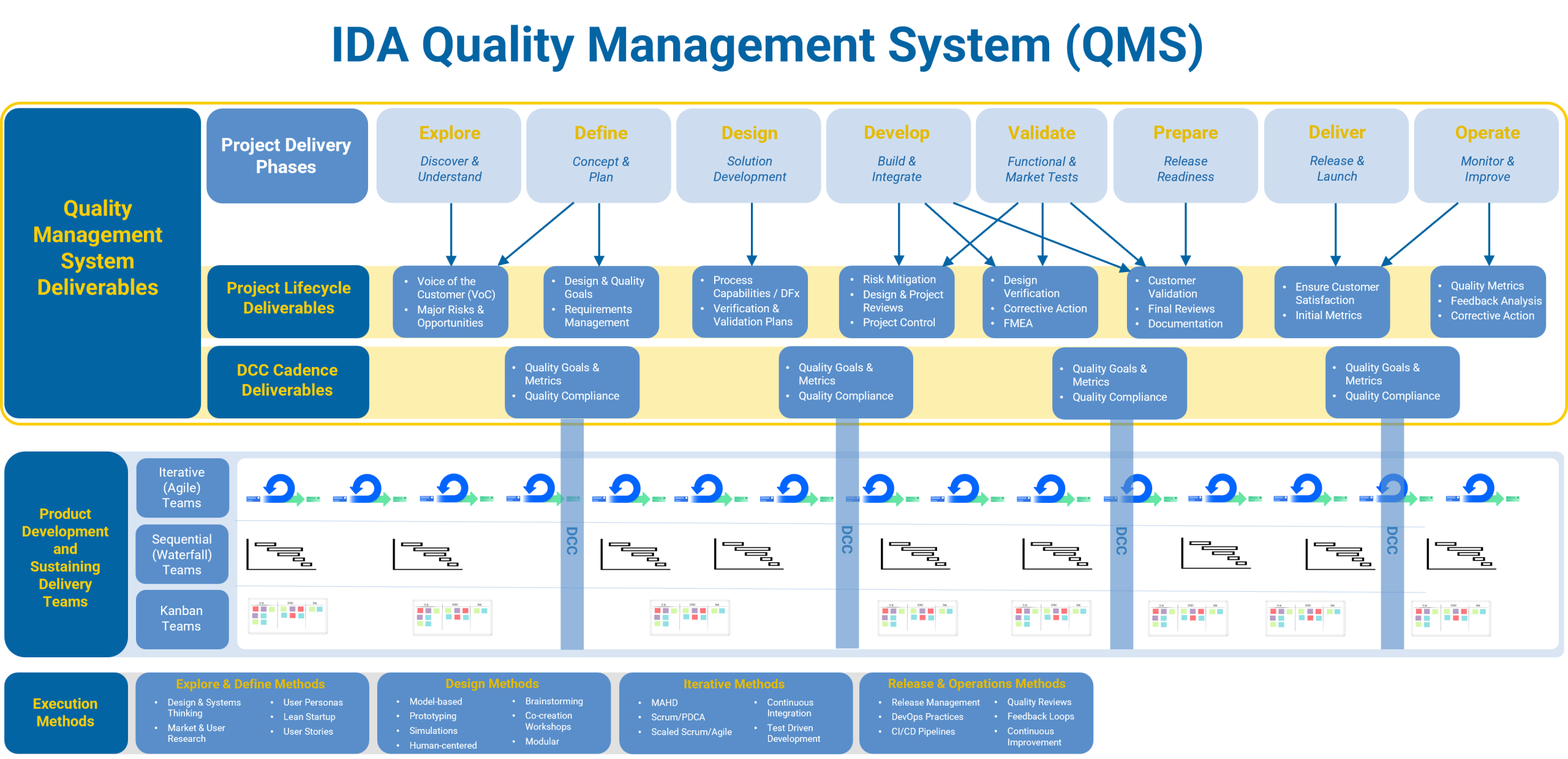
IDA Quality Management System (QMS)
The IDA QMS combines International Organization for Standardization (ISO) and Advanced Product Quality Planning (APQP) standards with agile project management best practices. Optimized for wide range of general product development environments, elements are implemented as needed using a phased deliverables approach, typically combined with iterative development methods.
As a key element of IDA to ensure product development quality, the IDA QMS has built-in quality auditing with deliverables on the DCC cadence. This eliminates most or all of the need for separate internal auditing activity related to product development. Auxilium’s toolkit is available for guidance and templates.
Example Use Case
This example shows New Product Development (NPD) teams using Auxilium’s Methods for Agile Hardware Development (MAHD) framework, and Sustaining teams using a Kanban approach. The Software team uses Scrum methodology, supporting both NPD and Sustaining. The DCCs ensure that all teams are aligned to strategic and urgent priorities. Sustaining teams generally plan capacity to handle day-to-day urgent matters while managing progress toward DCC commitments.